
A production budget can fail before the first invoice arrives. Someone starts with what the client or investor can spend and fills in lines until the total matches. The schedule comes later, fringes get guessed, insurance is a round figure, and contingency is whatever remains. The arithmetic balances. The production doesn't.
A real budget runs the other way. It starts with the script or treatment, turns it into a schedule, and prices that schedule line by line. Then it adds the costs that don't show up on screen but always show up on the bill. This guide shows how to build one that survives the shoot, with an example allocation at the end.
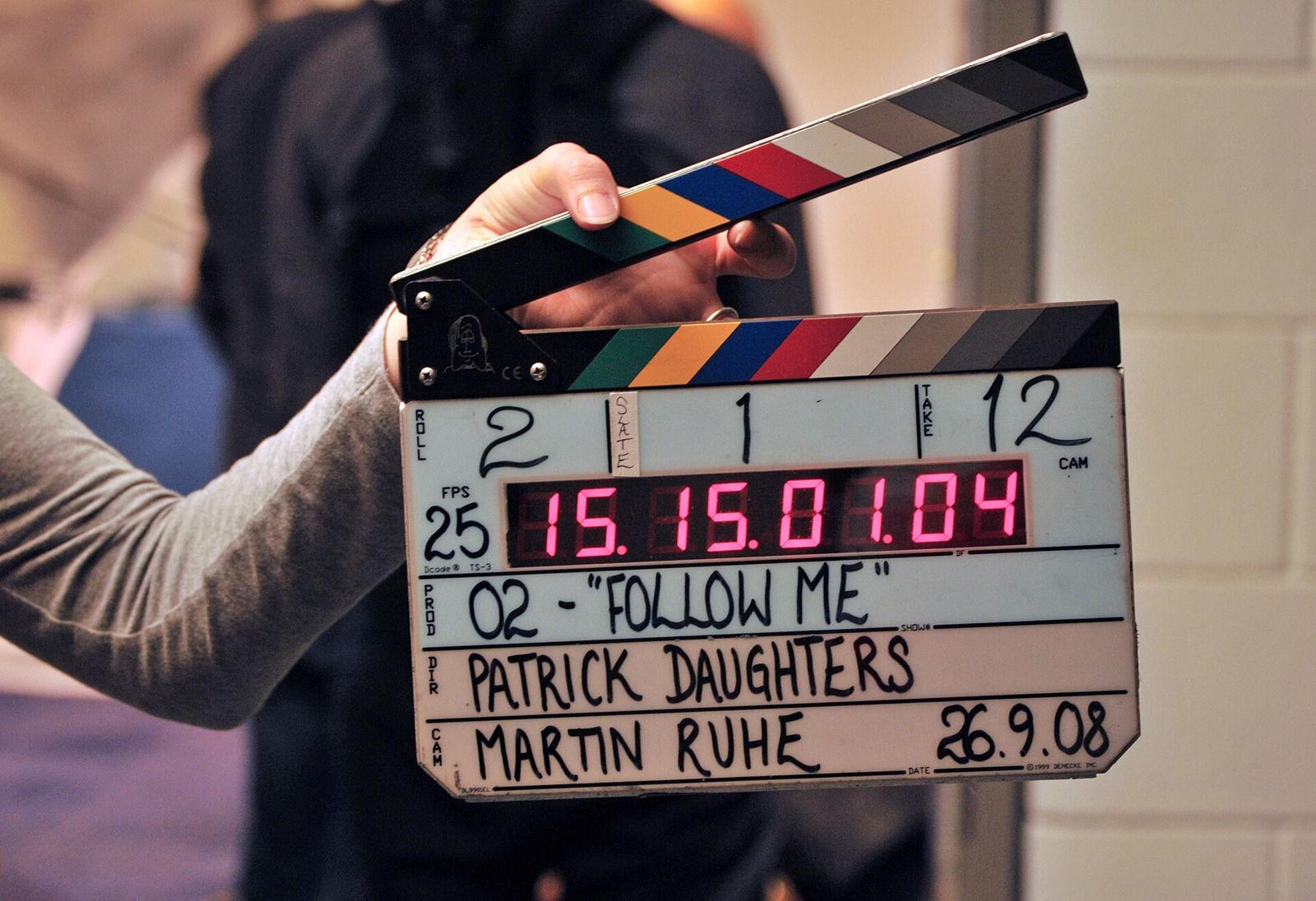
Start with the schedule, not the total
A budget is the schedule expressed in dollars. Before you price anything, break the script or treatment down into scenes, locations, cast, and special requirements like vehicles, stunts, animals, night work, a drone or a crane. Then build a shooting schedule. The schedule answers the questions that drive most of the cost:
- How many shoot days? Crew, gear, locations and catering are all priced per day.
- How many company moves? Every move between locations costs setup time, and setup time costs crew hours.
- Day or night, interior or exterior? Night exteriors need more lighting, more power and longer turnarounds.
- Who works which days? A performer who works two days costs very differently from one held for the whole shoot.
If the total doesn't fit the money, change the schedule (fewer days, fewer locations, fewer moves). Don't quietly shave every line by 10%. Cutting lines without cutting scope is how a budget turns into overtime.
The four parts of a budget
Almost every professional budget, whether it's a feature or a 30-second spot, falls into the same four groups. The top sheet summarizes them on one page.
| Section | What it covers | Common mistakes |
|---|---|---|
| Above the line (ATL) | Rights and story, writer, producers, director, principal cast | Leaving out rights or option payments; forgetting cast fringes and agency fees |
| Below the line: production | Crew, camera, lighting and grip, art, wardrobe, locations, permits, transportation, catering, production office | Budgeting crew at a 10-hour day when the schedule really needs 12 |
| Below the line: post | Editorial, color, sound design and mix, music, VFX and graphics, deliverables | Treating post as "whatever is left" |
| Other / indirect | Insurance, legal, accounting and payroll services, financing costs, contingency | Leaving these off until a financier or bond company asks |
Above the line costs are usually negotiated deals tied to specific people. Below the line costs come from rates, quantities and days, and they're where the schedule shows up most clearly. Keep post as its own section. The finishing article in this series explains how to protect it.
Fringes: the cost of people beyond their rate
A crew member's day rate isn't what they cost you. On top of wages, an employer pays payroll taxes and, on union jobs, contributions the contract requires. These are called fringes, and budgets that leave them out are short from the first day.
Some of the pieces you can check yourself:
- Federal payroll taxes. For covered wages in 2026 the employer pays 6.2% Social Security tax on wages up to $184,500 and 1.45% Medicare tax with no wage limit, per IRS Publication 15. That's 7.65% before state unemployment, federal unemployment and workers' compensation, which vary by state and payroll company.
- Union pension and health. Union agreements set their own contribution rates. For example, SAGindie's summary of the 2026 SAG-AFTRA TV/Theatrical changes lists a pension and health rate of 22% for principal performers starting September 6, 2026. Commercials, IATSE crew and DGA contracts each have their own rates, so read the agreement that actually applies to your job.
- Payroll company fees and state withholding. In Illinois, the Film Office notes that 4.95% state income tax withholding is required on compensation for crew and anyone named in the end credits, paid on or after December 12, 2025, whether they're paid through payroll, a 1099 or a loan-out company. That isn't an added cost, but it changes how you pay people and how you set up the production.
Practical rule: build fringes as a separate line for each department, at the rate for that worker's status (union, non-union, loan-out). Then check them with your payroll company before you lock the budget.
Insurance: price it early, not last
Insurance is a real line item, and it often shapes what you can do. A typical production package covers general liability, equipment and props, third-party property damage, and workers' compensation. Some projects also need auto, aviation (for drones), or errors and omissions coverage for distribution.
Locations and permit offices often decide your minimums for you. The Chicago Film Office, for example, requires a certificate of insurance with $1,000,000 per-occurrence general liability that names the City as additional insured. Rental houses, landlords and venues set their own requirements too.
What to do: get an insurance quote while you're still building the schedule. Stunts, water, heights, aerials, vehicles and night work can all change the premium. Find that out before you promise the shot.
Contingency: a real line, not leftover money
A contingency is money set aside for things that weren't supposed to happen, like weather days, a lost location, a sick lead or a broken camera. It is not a place to hide costs you already know about.
Completion guarantors put this plainly. UniFi Completion Guarantors' FAQ says the contingency "is not meant to cover production costs that are known, anticipated, or reasonably foreseeable." It also says that, historically, the standard contingency has been 10% of all other budgeted costs, excluding the bond fee and financing costs. UniFi notes that a different amount can be appropriate after it reviews a production. The IATSE Low Budget Theatrical Agreement leaves a contingency of up to 10%, plus the completion bond premium, out of the production costs it uses to set a film's budget tier.
Two rules that keep a contingency honest:
- Price known risks as their own lines. If you know it might rain on your exterior day, budget a weather cover day or an interior backup. Don't count on contingency for it.
- Decide who can spend it. Write down who approves contingency spending (producer, client, financier) and how it gets reported. If nobody has to sign for contingency spending, it gets used up early on small things.
Example allocation: a $120,000 branded film
The table below is illustrative only. It's not an industry benchmark or a Colton Productions quote. It is a planning exercise for a hypothetical two-day brand shoot with a small cast and two locations. Labor assumptions differ by role; not every person works every prep or wrap day. Company overhead and profit are included in creative/production fees here; paid media and a separate distribution campaign are excluded. Your percentages will change with cast size, locations, union status, travel and the post-production finish.
| Category (illustrative) | Example amount | Share of total |
|---|---|---|
| Above the line: creative fees, director, producer | $18,000 | 15% |
| Talent fees and usage | $9,000 | 7.5% |
| Production crew labor: role-specific prep, 2 shoot days and wrap | $27,000 | 22.5% |
| Fringes and payroll fees | $7,200 | 6% |
| Camera, lighting, grip and sound packages | $13,200 | 11% |
| Art, wardrobe, hair and makeup | $6,000 | 5% |
| Locations, permits, transportation, catering | $8,400 | 7% |
| Post-production: edit, color, sound mix, music, graphics, versioning | $16,800 | 14% |
| Insurance, legal and accounting | $3,600 | 3% |
| Contingency (about 10% of the other costs) | $10,800 | 9% |
| Total | $120,000 | 100% |
Post has a real share before the shoot starts, and contingency is a planned line sized to the rest of the budget.

Tax incentives belong in the finance plan, not the budget total
If you're shooting in Illinois, the Illinois Film Production Tax Credit can be a meaningful part of the finance plan. For productions that started on or after July 1, 2025, the credit is 35% of qualified Illinois spending and Illinois-resident wages. But the credit is issued only after an independent CPA engagement and the Film Office verifies your claim, so it's money you get back after the shoot, not cash for shoot day. Budget the full cost of the production. Then show the incentive as a source of money in your finance plan, and plan for the CPA audit fee and the timing. The next article in this series covers how producers fund that gap.
A budget-review checklist
Before you send a budget to a client, investor or bond company, check that:
- Every shoot day on the schedule has crew, gear, location and catering costs.
- Crew hours match the real day length the schedule needs, including overtime.
- Fringes are priced by worker type and confirmed with payroll.
- Insurance is quoted, not guessed, and meets each location's and permit's requirements.
- Post-production has its own section and covers the whole finish, including deliverables.
- Contingency is its own line, with a written approval process.
- Known risks (weather, night work, travel) have their own lines or backup plans.
- Incentives are shown as a source of money, not subtracted from the cost.
Working with a production company
When a brand or agency hires a full-service company, the company should hand over a budget that already works this way: built from a schedule, with fringes, insurance and contingency shown openly. Colton Productions, based in Port Byron, Illinois, works on projects of $50,000 and up. Whoever you hire, ask to see the top sheet and the assumptions behind it, not just the total.
FAQ
How much contingency should I budget? UniFi Completion Guarantors says the historical standard has been 10% of other budgeted costs, excluding the bond fee and financing costs, and that the right amount depends on the production. Size it to your actual risks, and don't use it for costs you already know about.


