
When a marketing director approves a five- or six-figure video budget, the money doesn't go to "a camera and an editor." It pays for a short-lived company that gets built for the project: a crew, a plan, insurance, permissions, a post-production pipeline and a delivery package that has to work on every screen the campaign runs on.
Video is now a default channel, not an experiment. In Wyzowl's 2026 State of Video Marketing survey, 91% of businesses said they use video as a marketing tool, and 63% of video marketers said they had used AI to help create or edit video, up from 51% the year before. With that much video out there, a serious budget has to buy a spot that stands out.
This guide walks through what a professional commercial or brand film at the $50,000+ level actually involves, so you can read a bid, ask better questions and know where the time goes.
The crew: who is actually on set
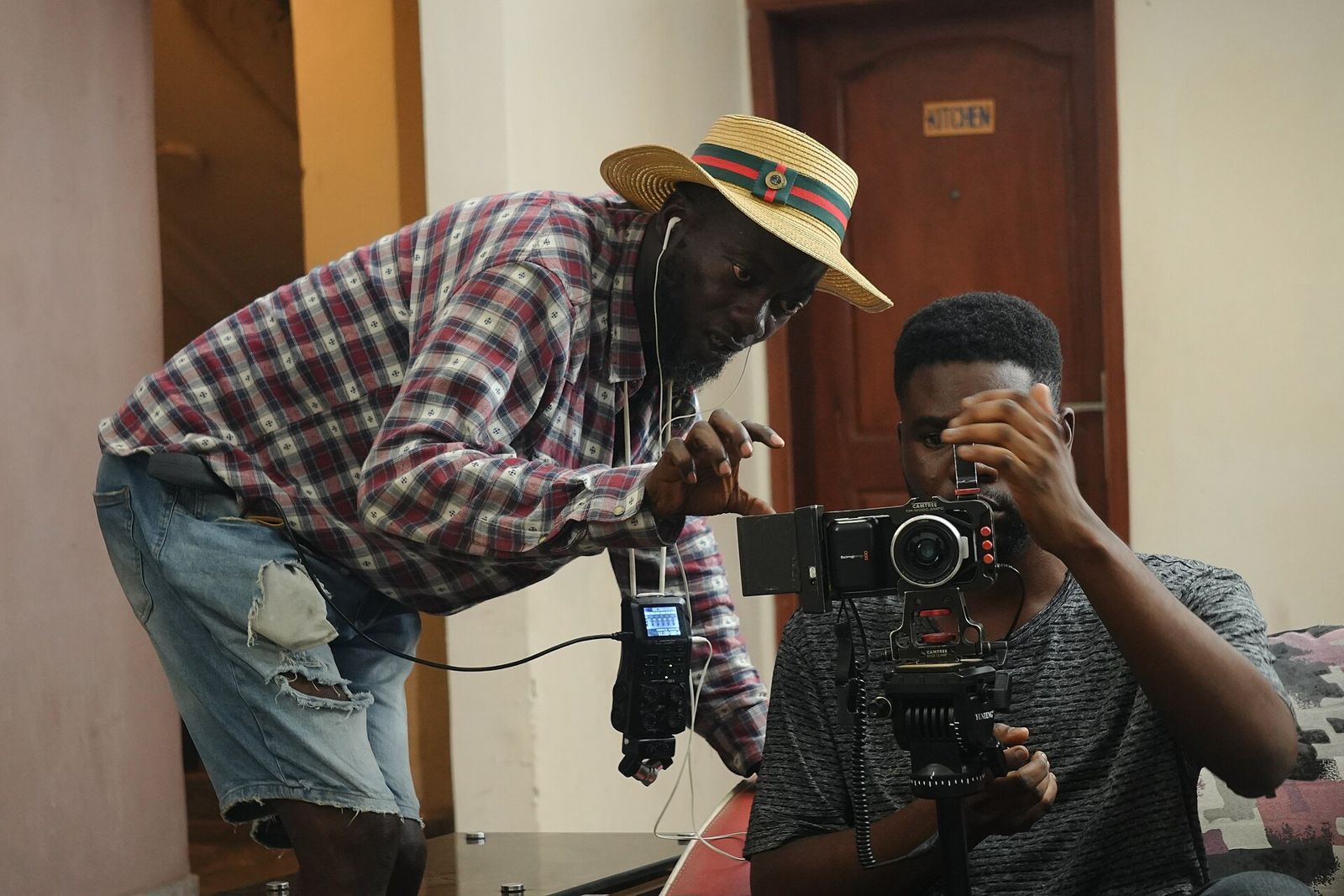
At this budget level, a shoot has department heads, and each one runs a team. A typical commercial crew, as listed in Colton Productions' published production process, includes the following roles.
| Role | What they own |
|---|---|
| Director | The creative interpretation of the script, performances and shot choices |
| Director of Photography (DP) | The look: camera, lenses, framing and how the scene is lit |
| Gaffer | The lighting crew and the power that runs it |
| Grip | Rigging, camera support and shaping light (flags, stands, dollies) |
| 1st Assistant Camera (1st AC) | Focus, lens changes and the camera build |
| Sound recordist | Clean dialogue and sound on location |
| Wardrobe | Talent clothing, continuity and fittings |
| Script supervisor | Continuity and notes the editor relies on later |
| Client liaison | Your point of contact on set, so feedback reaches the right person |
Larger spots add a producer, a production manager, production assistants, hair and makeup, an art department, a DIT (digital imaging technician) to manage the camera files, and sometimes a drone operator. A smaller crew isn't automatically cheaper in the end. If no one owns sound or continuity, the cost shows up in post.
What to ask: Who hires, schedules and supervises the crew? On a full-service job, it should be the production company, not you.
The gear: more than the camera
Buyers tend to focus on the camera body, but on a commercial it's often the smallest decision. The gear package usually includes:
- Camera and lenses: a cinema camera, a matched lens set, monitoring, and media/backup workflow.
- Lighting and grip: fixtures, power distribution, diffusion, stands and rigging. This is often the largest truck on a location shoot.
- Sound: wireless and boom microphones, a recorder and timecode sync.
- Camera movement: dolly, slider, gimbal or crane, depending on the creative.
- Aerials: drones need a pilot certified under the FAA's Part 107 rules for commercial work. The FAA explains the Remote Pilot Certificate requirements here.
The right package depends on the treatment, not on a menu. A product film shot in a studio and a multi-location brand story need very different trucks.
Permits, insurance and permissions
This is the part of the budget that marketing teams most often underestimate. Requirements vary by city and type of location.
- Chicago issues film permits for streets, sidewalks, alleys and other public property. The Chicago Film Office lists a fee of $250 per day per location, a certificate of insurance with $1,000,000 per-occurrence general liability that names the City as additional insured, and a community notification leaflet. It needs at least 4 full business days to review, 5 for traffic control or drones, and 10 for street closures or stunts.
- Iowa doesn't require a general filming permit, according to the state's film office, Produce Iowa. Parks, other public facilities and street closures may still need advance authorization and proof of insurance.
- Private locations need a signed location agreement. Recognizable people need talent releases, and union talent comes with contract terms.
Illinois tax credit: For productions that start on or after July 1, 2025, the Illinois Film Production Tax Credit is 35% of qualified Illinois spending. There's an extra 5% on Illinois-resident wages for work outside Cook, DuPage, Kane, Lake, McHenry and Will counties. According to the Illinois Film Office FAQ, productions under 30 minutes must spend more than $50,000 in Illinois to qualify, and a commercial's application must be received 24 hours before shooting. Credits are verified through an independent CPA, so talk to your tax adviser and producer early. Don't count on the credit once the shoot is over.
Pre-production: where the shoot is actually won
Pre-production is where scope gets locked and expensive surprises get removed. Colton Productions' published process puts discovery in week 1 and concept, script and pre-production in weeks 1–2. The deliverables include a creative brief, campaign goals and KPIs, budget parameters, 2–3 concept routes, a locked script, talent and location agreements, permits, a shot list, a call sheet and an equipment manifest.
The practical rule is simple. Anything that isn't decided before shoot day gets decided on the clock, with a full crew waiting.
A realistic timeline
The ranges below come from Colton Productions' production process page. They describe one company's typical schedule, not an industry standard. Your project may run longer, especially with casting, multiple locations or legal review.
| Phase | Typical duration | Key outputs |
|---|---|---|
| Discovery & strategy | Week 1 | Creative brief, audience and message, KPIs, budget parameters |
| Concept & script | Weeks 1–2 | 2–3 concept routes, locked script, voice and tone guide |
| Pre-production | Weeks 1–2 | Casting, locations, permits, crew, shot list, call sheet |
| Production | 1–3 shoot days | Hero shots, B-roll, product and lifestyle coverage |
| Post-production | 1–3 weeks | Rough cut, 2–3 revision rounds, color, sound, VO, music, graphics |
| Delivery & versioning | 2–5 business days | Broadcast master, cut-downs, aspect ratios, captions, archive |
Where AI and modern workflows actually save time
AI hasn't replaced the crew. It has taken over many slow, repetitive steps around the crew. These are the gains a buyer will actually notice:
- Finding footage faster. Adobe Premiere Pro's Media Intelligence lets editors search clips by describing what's in them, like "red truck" or "wide shot at sunset," and by transcribed speech and metadata. Adobe says the analysis runs on the editor's computer and the footage isn't used for AI training.
- Script-to-timeline assembly. Blackmagic Design's DaVinci Resolve 20 added AI IntelliScript, which builds a timeline from a script by matching transcribed dialogue. It's useful for interviews and testimonial-driven brand films.
- Dialogue and audio cleanup. Tools such as iZotope RX, Resolve's Voice Isolation and Premiere's Enhance Speech can rescue location audio that once meant bringing talent back for ADR (re-recording dialogue in a studio). Colton Productions uses iZotope RX for audio restoration.
- Small fixes, not fake footage. Premiere's Generative Extend can add a few frames to the start or end of a clip for a cleaner transition. Adobe notes it can't create spoken dialogue and doesn't work on clips that contain music.
- Automated review and approval. Platforms like Frame.io let stakeholders leave time-stamped, frame-accurate comments in one place instead of long email threads. With Camera to Cloud, proxies can upload from set so remote approvers can see footage the same day.
Keep the limits in mind too. AI-generated people or voices bring legal obligations. Under the 2025 SAG-AFTRA Commercials Contracts, producers need a performer's informed written consent before creating or using a digital replica. If your video's call to action sends leads to an AI voice agent that calls them back, the FCC ruled in 2024 that AI-generated voices count as "artificial" voices under the TCPA. That means outbound calls generally require prior express consent. Build that into the campaign plan, not the edit.
What you should get at delivery
A professional delivery package should be specified in the contract. As an example, Colton Productions lists a broadcast master (ProRes or MXF), :15, :30 and :60 cut-downs, 16:9, 9:16 and 1:1 versions, closed caption files and a raw footage archive. Get the list in writing, because versions you forgot to ask for get billed as change orders later.
A local example
In the Quad Cities, Colton Productions is a full-service production company based at 106 N Main St in Port Byron, Illinois. It handles production, post and audio restoration in-house, and its public work samples include a Sprint/Pokémon commercial and the official trailer for ARMED (2018). It's one of several regional options. Whoever you hire, use the checklist above to compare bids line by line.

FAQ
What does a $50,000+ budget usually buy? It depends on the scope. In general, it covers a full professional crew for one or more shoot days, a cinema camera, lighting and sound packages, locations and permits, insurance, talent, and a full post-production finish with versioning. Multiple locations, union talent, travel or heavy VFX can use up a budget quickly.
How far ahead should we start? Work backward from your air date. A schedule like the one above needs several weeks before the shoot, plus 1–3 weeks of post. Allow more time for casting, permits that need 10 business days (such as Chicago street closures) or extra legal review.
Does AI make professional production cheaper? It mainly makes it faster in specific steps, like finding footage, cleaning audio, assembling interviews and handling review. Those hours saved can go back into creative work or revisions. It doesn't remove the need for the crew, the lighting or the locations.
Can we use an AI voice or a digital double of an actor? Only with the right permissions. Union talent requires informed written consent for digital replicas under the 2025 SAG-AFTRA Commercials Contracts, and you should clear any AI voice with your legal team.
Do we qualify for the Illinois film tax credit on a commercial? Possibly. Commercials are eligible, and productions under 30 minutes need more than $50,000 in Illinois production spending. Applications for commercials must be received 24 hours before shooting. Confirm eligibility with the Illinois Film Office and a qualified CPA.


